
Why commercial waste is the least-benchmarked line on most P&Ls
Commercial waste contracts are renowned for opaque pricing, automatic uplifts and unauthorised charges. Most operators inherit a contract from a previous tenant or signed years ago and have never re-tendered. Done properly, a structured commercial waste review delivers 15-30% savings on day one while also improving recycling rates and ESG reporting.
Simpler Recycling and the streams you need to separate
Under England's Simpler Recycling reforms, most workplaces must arrange separate collections for dry mixed recyclables (paper, card, plastics, metals, glass), food waste and residual general waste. Larger and food-producing businesses face stricter rules on food waste and on glass separation.
We map your current streams against the regulations, right-size containers per stream, and tender each one to the most competitive licensed carrier in your area, whether that's a national contractor, a regional independent or a specialist hazardous-waste operator.
Bin audits, lift frequency and contamination charges
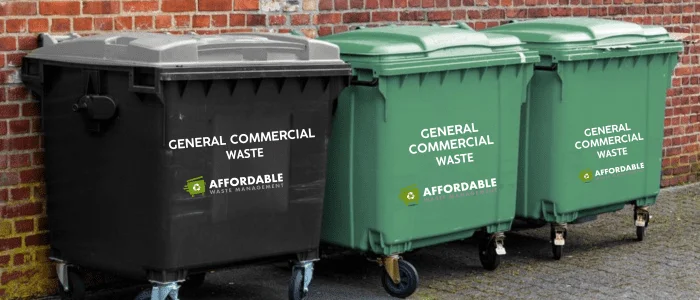
Two of the biggest hidden costs in commercial waste are over-sized bins lifted on too frequent a schedule, and contamination charges (e.g. food in DMR, hazardous in general). We carry out a fill-level audit per stream, recommend container sizes and lift frequencies tuned to your real volumes, and rewrite waste-stream signage and toolbox guidance to cut contamination at source.
Duty of Care and ESG reporting
Every UK business has a legal Duty of Care to ensure waste is handled and disposed of correctly, evidenced by waste transfer notes (annual or per-collection) and consignment notes for hazardous streams. We manage the paperwork centrally so you have an audit trail for the EA and for your ISO 14001 / ESG reporting, including recycling rates per site.